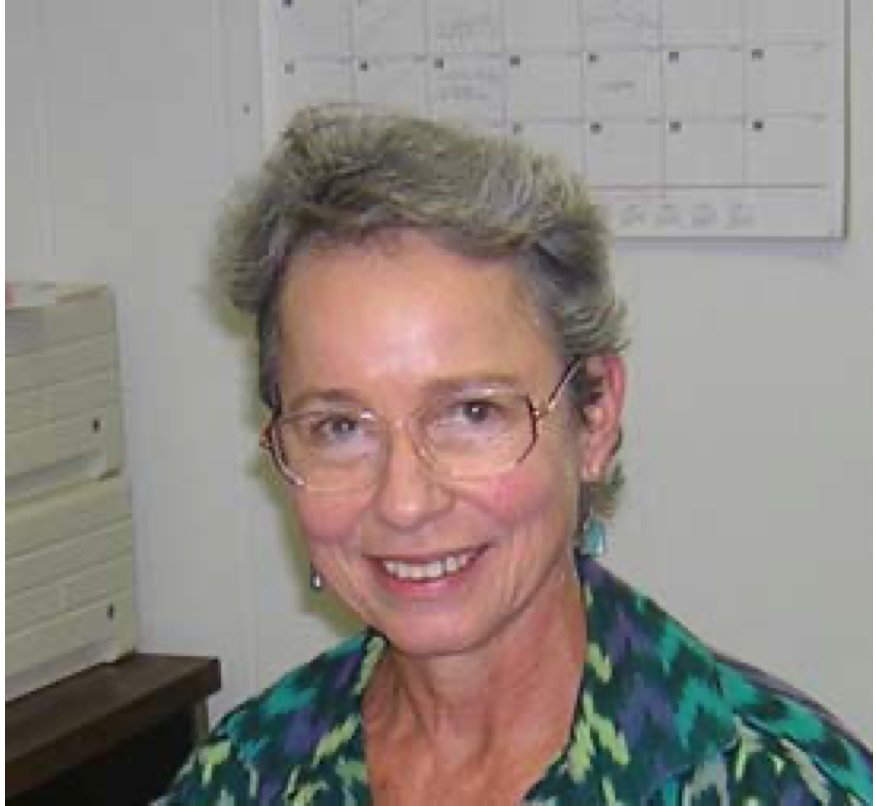
Remembering Mary Gibson
Rutgers AAUP-AFT mourns the passing of Mary Gibson, a former Rutgers professor, union president, grievance representative, and tireless advocate for public education, faculty members, academic workers, and Rutgers students. Mary’s scholarship and teaching focused on social and political philosophy and feminist theory. She was the author of Workers’ Rights and later edited To Breathe Freely: Risk, Consent and Air, an examination of air pollution and the ethical questions surrounding workplace and environmental hazards. Her work also addressed reproductive labor, autonomy, exploitation, and the commodification of women and children.
Her pursuit of justice extended well beyond the university. Before coming to Rutgers, Mary was arrested five times while participating in demonstrations, primarily protests against the United States war in Vietnam. She described the foundation of her union involvement as a lifelong commitment to social justice.
Mary came to Rutgers in 1972 as a member of the Philosophy Department at Livingston College. The college had been founded only a few years earlier with a mission of expanding access to a university education, particularly for economically and educationally disadvantaged students from urban communities. That mission reflected Mary’s commitments as a teacher and scholar.
After completing her Ph.D. at Princeton University in 1975, Mary entered the tenure track. In 1980—the same year she received Livingston College’s award for excellence in teaching—she was denied tenure. Mary challenged that decision through the union grievance process. Following two grievances and a three-year struggle, she returned to Rutgers with tenure.
A Life in the Union
Mary served Rutgers AAUP in nearly every capacity imaginable. She was president, treasurer, grievance chair, and a member of the negotiating committee. She also served on committees addressing affirmative action and discrimination and occupational safety and health.
Nationally, Mary served the AAUP as first vice president, chaired its Committee on Women in the Academic Profession, and served on the Committee on Professional Ethics. She was recipient of the Marilyn Sternberg Award in 2000, an award given to “AAUP members who best demonstrate concern for human rights, courage, persistence, political foresight, imagination, and collective bargaining skills.”
After retiring from the Rutgers faculty in 2002, Mary continued volunteering with Rutgers AAUP-AFT. She later explained that she had felt increasingly torn between her faculty responsibilities and her grievance work and ultimately retired so that she could devote more of herself to the union. In 2005, she joined the union staff as a staff representative.
Working alongside her colleague and close friend BJ Walker, Mary helped faculty members, adjunct faculty, teaching and graduate assistants, and EOF counselors navigate problems in their workplaces. She offered confidential consultation, helped members understand their rights and options, and represented them through negotiated grievance procedures when informal efforts failed.
Mary believed in resolving problems constructively whenever possible. She also believed workers needed to know how to push back through direct action when necessary. She found particular satisfaction in helping colleagues understand the issues confronting them, consider their options, and decide for themselves how to act. She did this work with kindness and with a give-everyone-the-benefit-of-the-doubt approach.
Her work was relational, patient, and grounded in the understanding that a union is built through people caring for one another. Mary treasured her relationships with union staff, member activists, and the colleagues she assisted throughout her years at Rutgers.
“Brighten the Corner Where You Are”
Mary credited her longtime partner and husband, Rutgers labor activist and professor Wells Keddie, as one of the greatest influences on her life. When asked what led her to become involved in the union, she cited her lifelong work in social justice and an adage he often quoted from the Methodist hymn—despite them both being confirmed atheists— “Brighten the Corner Where You Are.”
That idea captured much of what Mary gave to Rutgers AAUP-AFT and her broader community. She confronted injustice where she encountered it. She helped individual workers defend themselves while strengthening the collective structures that protect us all. She brought together scholarship, teaching, feminist thought, antiwar activism, and the daily work of building a union.
Mary described her life as an activist, educator, and scholar as “a rewarding, often exhilarating, if sometimes daunting, journey.” Generations of Rutgers faculty members and academic workers are stronger, and the road has been brighter, because she made that journey with them.
Continuing Mary’s Legacy
Mary’s commitment to developing new generations of activists continues through the Mary Gibson Internship for Undergraduate Activists. The program gives Rutgers students the mentorship, financial resources, and space to organize around issues affecting their lives and communities.
It is a fitting continuation of Mary’s work. The program helps students recognize that their concerns can become the starting point for collective action, and, importantly, that they do not enter that work alone.
We remember Mary Gibson as a principled unionist, a committed teacher and scholar, a trusted advocate, and a cherished colleague and friend. We honor her by continuing to build the kind of union to which she devoted so much of her life: one that educates, supports, organizes, and gives people the collective power to fight for justice.